
May 6, 2026
Key Highlights:
● Robo-advisors simplify ESG investing, even in complex emerging markets.
● Micro-portfolios allow investors to start small while targeting social impact.
● Automated platforms handle asset allocation, rebalancing, and ESG screening.
● Emerging market exposure can diversify risk and enhance growth potential.
● Investors can monitor and adjust their portfolio without extensive research.

Estimated Reading Time: 12 minutes┃Post by: Elena Roberts
ESG Investing Meets Technology
Socially responsible investing has surged in popularity over the past decade, yet navigating ESG (Environmental, Social, Governance) criteria remains a challenge—particularly in emerging markets where data can be inconsistent and corporate governance varies widely. Traditional methods of research often require hours of sifting through company reports, ESG scores, and regional economic indicators. For retail investors seeking to make a positive impact without sacrificing financial growth, robo-advisors offer a modern solution.
Robo-advisors are digital platforms that automate investment strategies based on your financial goals and risk tolerance. When applied to ESG investing, they can help construct a highly personalized portfolio aligned with your values while also introducing exposure to emerging markets. The appeal is clear: you can craft a micro-portfolio, invest in companies driving social or environmental change, and diversify globally—all without spending weeks conducting research.
To illustrate this, consider a hypothetical investor, Maria, a 32-year-old marketing professional based in Chicago. She wants to support renewable energy in Southeast Asia and sustainable agriculture in Latin America. Using a robo-advisor, Maria selects ESG-focused ETFs that concentrate on these regions. The platform automatically allocates her $5,000 initial investment across five different ETFs, balancing her desire for impact with her tolerance for risk.
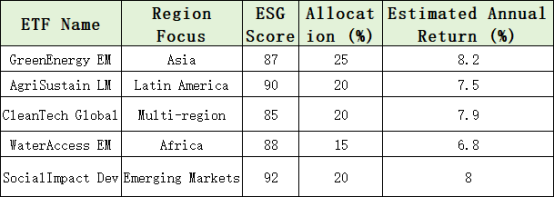
This table highlights how a robo-advisor can construct a diversified micro-portfolio that balances geographic exposure, ESG impact, and potential returns. The automation ensures Maria’s portfolio remains aligned with her values while mitigating concentration risk.
How to Build an ESG Micro-Portfolio in Emerging Markets
Creating a micro-portfolio using a robo-advisor involves three key steps: goal setting, ESG preference specification, and automated allocation. First, investors define their financial objectives, whether it’s long-term growth, moderate income, or risk-adjusted balance. For emerging markets, it is critical to also set a regional focus to navigate currency volatility, political risk, and sector-specific dynamics.
Once goals are established, most robo-advisors allow you to prioritize ESG factors. Platforms such as Betterment, Wealthfront, and SoFi Invest have ESG modules that rank companies or funds based on carbon footprint, labor practices, governance transparency, and social impact initiatives. By adjusting the slider or selecting pre-configured filters, investors can tailor exposure to sectors like renewable energy, microfinance, or sustainable agriculture.

The final step is automated allocation and ongoing portfolio management. Robo-advisors monitor market trends, rebalance periodically, and provide ESG performance updates. In practice, this means that investors like Maria can log in once a month to review their portfolio’s ESG impact and financial performance without micromanaging individual stock selections.
Real-life data underscores the viability of this approach. Between 2018 and 2023, emerging market ESG ETFs saw an average annual growth of 7.6%, compared to 5.3% for non-ESG emerging market funds, according to Morningstar (2024). By integrating ESG criteria with technology-driven portfolio management, investors gain a dual advantage: supporting sustainable practices while capitalizing on high-growth markets.
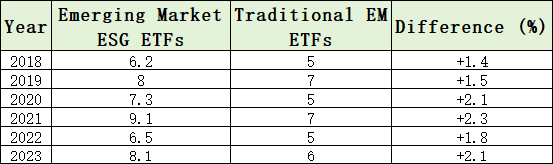
This performance table illustrates that ESG-focused micro-portfolios are not merely symbolic—they can generate competitive returns while adhering to an investor’s ethical priorities.
Practical Considerations and Risk Management
Despite the advantages, investors must consider the risks of emerging market ESG investing. Volatility is often higher due to currency fluctuations, regulatory uncertainty, and political instability. Robo-advisors mitigate these risks through diversification, but understanding potential drawdowns is essential. For instance, during the 2022 Latin American market correction, ESG ETFs experienced an average dip of 11% compared to 9% for broader regional ETFs. However, long-term performance still favored ESG strategies due to sector growth in renewables and sustainable agriculture.
Additionally, investors should scrutinize ESG scoring methodologies. Not all ratings are consistent, and some emerging market companies may report incomplete data. Platforms that source multiple ESG data providers can offer a more balanced view, enhancing the robustness of portfolio construction.
Finally, transaction costs and management fees, though generally lower on robo-advisors, should be factored into expected returns. Micro-portfolio investors with smaller allocations may find these fees more impactful. For instance, a $5,000 investment with a 0.45% annual fee costs $22.50 per year—modest but worth considering when compounding returns over a decade.
In real-world terms, consider how Maria’s $5,000 micro-portfolio could grow over five years with average annual returns of 7.8%:
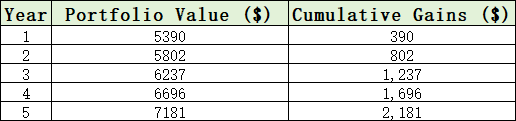
This projection illustrates the potential for compounding gains while maintaining ESG-aligned investment principles.
The Future of AI-Driven ESG Investing
The next evolution of robo-advisors is likely to involve much deeper personalization powered by artificial intelligence and alternative data analysis. Instead of simply selecting “conservative” or “aggressive” risk profiles, future investors may customize portfolios around highly specific themes such as:
● Ocean conservation
● Ethical semiconductor supply chains
● Gender-diverse corporate leadership
● Carbon-neutral logistics
● Sustainable food technology
● Circular manufacturing systems
Some robo-platforms are already integrating alternative ESG datasets including satellite imagery, supply-chain analytics, and social sentiment monitoring to improve sustainability scoring accuracy.
This matters because ESG ratings remain inconsistent across providers. A company receiving a high ESG score from one agency may receive a mediocre rating elsewhere due to differences in methodology. Advanced AI systems can aggregate multiple signals instead of relying on a single ESG framework.
Another emerging trend is dynamic portfolio adaptation. Traditional robo-advisors rebalance quarterly or annually, but future systems may continuously adjust ESG allocations based on real-time environmental or geopolitical developments.
Imagine a severe drought impacting agricultural sustainability across Latin America. An AI-enhanced robo-advisor could automatically reduce exposure to vulnerable agribusiness companies while increasing allocations to water-efficiency infrastructure firms.
Industry forecasts also suggest substantial growth ahead for ESG-focused robo-investing. One recent market outlook projected the global ESG robo-advisor sector to grow from approximately $6.5 billion in 2026 to over $19 billion by 2034.
At the same time, regulation is tightening globally. European disclosure standards and anti-greenwashing enforcement are pushing platforms toward greater transparency regarding ESG methodology and fund selection criteria. Investors may ultimately benefit from this regulatory pressure because it reduces misleading sustainability claims.

For small investors, the long-term implication is important: access to sophisticated ESG portfolio construction is no longer limited to wealthy institutional clients. Technology is gradually democratizing sustainable investing by lowering minimum investment thresholds, automating diversification, and reducing management costs.
The combination of robo-advisors, ESG integration, and emerging-market exposure represents more than a temporary fintech trend. It reflects a structural shift in how younger generations approach wealth building—balancing financial returns with measurable social and environmental impact.
Recent performance commentary from robo-advisor research firms also indicates that internationally diversified automated portfolios have benefited from stronger non-U.S. market performance in 2025, reinforcing the importance of global diversification within ESG strategies.
(The information provided in this article is for educational purposes only and should not be construed as investment advice. Readers should conduct their own research or consult a financial advisor before making investment decisions.)
FQAs
Q1: Can I start with less than $1,000 on a robo-advisor ESG micro-portfolio?
Yes, many platforms allow small initial investments, sometimes as low as $100, making ESG micro-investing accessible to nearly all investors.
Q2: How often should I rebalance my ESG micro-portfolio?
Most robo-advisors automatically rebalance quarterly, but you can adjust this frequency based on market conditions or personal preference.
Q3: Are emerging market ESG ETFs riskier than developed market ones?
Generally, yes, due to political, economic, and currency volatility. However, diversification and careful fund selection can help mitigate these risks.
About Author
Elena Roberts is a financial technology analyst and sustainable investing enthusiast. With over a decade of experience in portfolio management and fintech innovation, she specializes in integrating ESG principles into modern investment strategies, particularly in high-growth emerging markets.
References
[1] Morningstar. (2024). Emerging Market ESG ETFs: Performance Analysis.
[2] Betterment. (2023). Investing with ESG Values.
[3] Wealthfront. (2023). Sustainable Investing Options.
Recommend:

How Student Loan Forgiveness Can Become a Down Payment for Real Estate Investing

Protecting Your Investments from Inflation with TIPS and Floating-Rate Bonds

Budgeting for College Students: How to Stretch Every Dollar

Frugal Living for Beginners: Practical Steps to Save Money and Live Well