
May 9, 2026
Key Takeaways:
● Timing and method of exercise can significantly impact your overall tax burden.
● Spreading exercises over multiple tax years can reduce exposure to high income brackets.
● Using strategies like cashless exercises or early exercise can provide flexibility.

Estimated Reading Time: 9 minutes┃Post by: Alexandra Mercer
The Risks and Opportunities of Stock Options in Volatile Markets
Employer stock options constitute a significant amount of overall remuneration for many employees, yet exercising these options during a market downturn can seem like balancing on a tightrope. In contrast to a bull market, when prospective gains outweigh most worries, a declining market might result in significant losses or unanticipated tax obligations from poorly planned workouts. Three crucial elements—market timing, tax efficiency, and liquidity requirements—must be balanced.
Consider a mid-level tech employee, Sarah, who holds 5,000 incentive stock options (ISOs) at an exercise price of $20 per share. The stock currently trades at $25, down from a peak of $50 just six months prior. Exercising all her options at once could generate an alternative minimum tax (AMT) event, leaving her with a $15,000 tax bill despite only realizing $5,000 in immediate gains. To navigate this, Sarah may opt for a phased exercise strategy—exercising portions of her options gradually over several months or years.
The table below illustrates the potential tax outcomes based on different exercise strategies in this scenario:
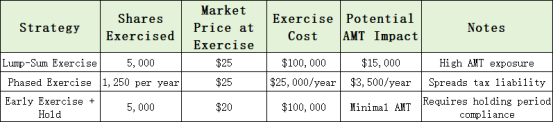
As the table shows, breaking exercises into smaller tranches can mitigate tax impact while giving the employee flexibility to monitor market trends. Realistic planning also accounts for liquidity—ensuring enough cash is available to cover both exercise costs and potential taxes without resorting to high-interest borrowing.
Strategies for Tax-Efficient Exercises During Downturns
Exercising stock options in a declining market calls for strategic methods rather than reactive decisions. Two of the most commonly used approaches are the cashless exercise and early exercise.
A cashless exercise allows employees to simultaneously buy and sell shares, effectively using the sale proceeds to cover the exercise price and taxes. While this minimizes upfront capital requirements, it also reduces the number of shares ultimately held, limiting long-term upside if the market rebounds. For example, Mark, an engineer with 2,000 options at $15/share, uses a cashless exercise when the stock drops to $18. He retains only 400 shares post-transaction but avoids a $25,000 cash outlay. This method provides a safety net during volatility.

Early exercise involves exercising options before they are fully vested or before a significant market decline. This approach can reduce AMT exposure because the spread between exercise price and current fair market value is smaller. However, it requires careful compliance with holding periods and potential repurchase agreements, which can introduce complexities if the company experiences additional downturns or liquidity issues.
Real-life data suggests that employees who stagger exercises over multiple tax years or use early exercises generally face lower tax burdens and less financial stress during downturns. According to a 2024 survey by the National Center for Employee Ownership, 62% of employees who used phased exercises reported feeling more in control of both taxes and investment risk compared to those who exercised in lump sums.
Another critical consideration is market monitoring. Employees must track not only the stock price but broader economic indicators, company-specific financials, and potential corporate events such as earnings announcements or funding rounds. Having a realistic exit strategy for shares and knowing personal risk tolerance ensures decisions are aligned with financial goals rather than reactive impulses.

Using Stock Options as a Hedging Tool
During a market downturn, employees can consider using their stock options as a hedging tool rather than immediately exercising. Strategies like protective puts or collars allow employees to secure a minimum value for their shares while maintaining upside potential if the stock rebounds. This approach can be particularly useful for those with a concentrated position in employer stock, balancing risk without triggering immediate tax consequences.
Phased Exercises and Diversification
Another avenue for tax-efficient planning is multi-year phased exercises combined with diversification. Employees can spread option exercises over several tax years to minimize exposure to AMT or high ordinary income brackets, then sell a portion of shares to reinvest in diversified assets like index funds or bonds. This reduces concentration risk and preserves long-term wealth while still allowing participation in potential upside.

Timing Around Corporate Events and Income Fluctuations
Finally, timing exercises around corporate events and personal income fluctuations can further optimize outcomes. Earnings releases, product launches, or funding rounds may temporarily increase stock value, offering favorable exercise windows. Likewise, aligning exercises with lower-income years or offsetting gains with capital losses elsewhere can meaningfully reduce tax burdens, turning a volatile market into an opportunity rather than a threat.
Case Scenarios and Illustrative Calculations
To make these strategies tangible, consider two employees, Alice and Ben, navigating the same downturn:
Alice has 3,000 options at $30/share. The stock trades at $35. She exercises all options at once, generating an immediate tax exposure of $10,500. Over the next 12 months, the stock falls to $28, resulting in an unrealized loss if she had held.
Ben uses a phased approach, exercising 1,000 shares every quarter as the stock fluctuates between $33 and $36. By the time he completes the exercise, his average AMT exposure is only $3,000 annually, and he retains the ability to sell shares strategically, mitigating potential losses.
By analyzing these scenarios, it becomes clear that timing and method significantly affect outcomes. Employees who understand the nuances of AMT, ordinary income taxes, and long-term capital gains can protect themselves from unnecessary financial strain.
A table showing realized vs. unrealized gains under different strategies emphasizes the value of thoughtful planning:

(The information provided in this article is for educational purposes only and should not be construed as tax, legal, or financial advice. Consult with a certified professional before making decisions regarding stock options or tax planning.)
FQAs
Q: Can exercising options during a downturn ever be more advantageous than waiting?
Yes, if structured to minimize AMT or spread tax liability, early or phased exercises can protect against future tax spikes and allow strategic positioning for a market rebound.
Q: Are cashless exercises always the safest option?
They reduce upfront cash needs but may limit long-term upside, so their effectiveness depends on individual financial goals and market outlook.
Q: How do I determine the optimal exercise strategy for my situation?
Consider your risk tolerance, liquidity, tax bracket, and market outlook. Professional advice combined with scenario modeling often yields the best approach.
About Author
Alexandra Mercer is a financial strategist specializing in employee equity compensation and tax-efficient investment strategies. With over 12 years of experience advising tech professionals and startup employees, she has helped hundreds navigate complex stock option scenarios during both bull and bear markets.
References
[1] National Center for Employee Ownership. (2024). Employee ownership trends and tax planning survey.
[2] Internal Revenue Service. (2023). Incentive Stock Options (ISOs).
[3] Fidelity Investments. (2023). Stock Option Strategies for Volatile Markets.
Stay on this blog for more actionable strategies to optimize your investments and compensation planning.
Recommend:

How Long It Really Takes to Build Your Credit?

Smart Moves: Exercising Employer Stock Options During Market Downturns Without Paying Excess Taxes

The Retirement Healthcare Strategy Most Americans Overlook: Maximizing Your HSA

Budgeting with Irregular Income: A Practical Guide for Beginners